
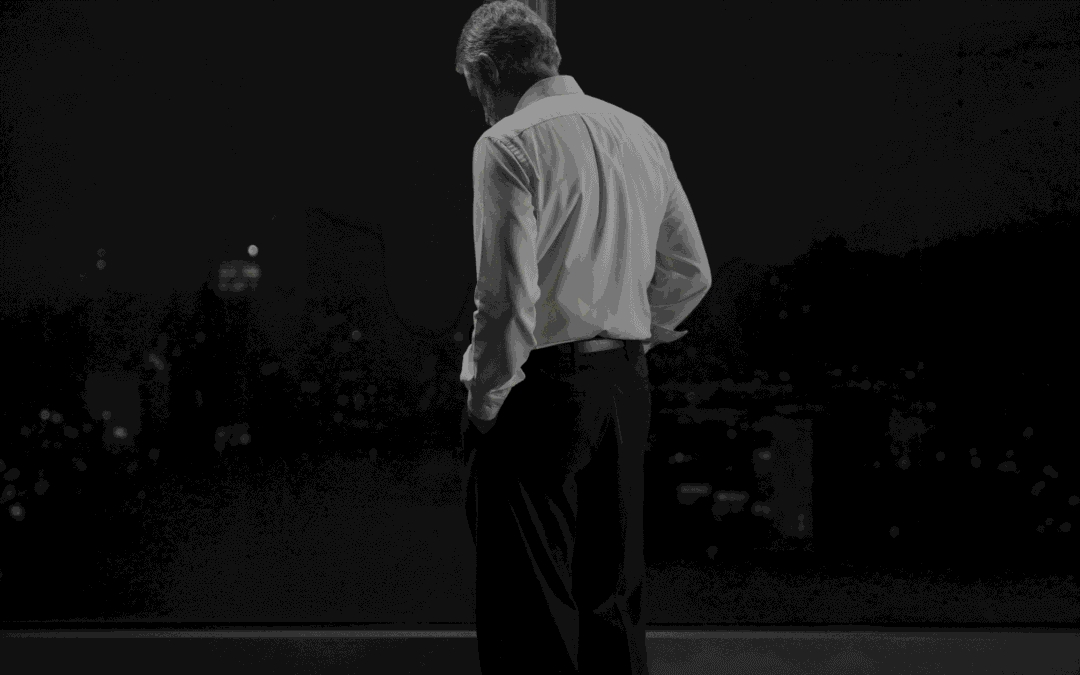
The signals get reframed as drive. The cost is invisible until the body refuses to keep going.
Burnout among senior executives is the most poorly diagnosed condition in modern business. Not because the symptoms are subtle — they are not — but because the people best positioned to recognise them have built their identities on outrunning them. By the time most C-suite leaders acknowledge that something is wrong, the body has already started making the decision for them.
In Let’s Talk Leadership, I write about my own experience of this: the burnout didn’t arrive as a single explosion; it crept in quietly. Sleepless nights, panic attacks, a sense of being trapped inside my own life. I was managing multi-million-euro productions and couldn’t manage myself. What struck me most, looking back, wasn’t that I had ignored the signs. It was that I had reframed them. Exhaustion became dedication. Insomnia became drive. The inability to switch off became proof that I cared. The same reframing happens in nearly every executive I work with now.
This article is not about generic stress management. It’s about the specific warning signs senior leaders miss in themselves — and why those signs are so easy to miss precisely because they look so much like the qualities that got you to the top in the first place.
The First Sign: Identity Fatigue
Most discussions of executive burnout focus on physical symptoms — fatigue, sleep disruption, cardiovascular markers. These matter, but they are downstream. The upstream signal, the one that almost always comes first, is what I call identity fatigue: the exhaustion of maintaining multiple personas across different audiences.
One CEO once told me, I don’t even know what I like anymore. Everything I do feels like a version of what others expect. He was articulating something most senior leaders feel but rarely name. The version of you that appears in board meetings is different from the version that appears in front of employees, which is different from the version that meets investors, which is different from the version that goes home to family. Each performance has its own grammar. Each requires energy. And the cumulative cost is rarely visible because the rewards — promotion, respect, financial success — are immediate and the depletion is delayed.
Identity fatigue presents as a specific kind of tiredness that sleep does not fix. You can have eight hours of rest and still feel hollow. The exhaustion is not in the body — it is in the apparatus that keeps producing different selves. Over time, leaders with identity fatigue describe a strange dissociation: they can read the market perfectly but cannot read themselves. The instruments work for everything except the operator.
The Second Sign: The Drift Toward Cynicism
The next signal usually arrives in language. The leader who used to describe their team with curiosity starts describing them with contempt. They’re not committed. They don’t get it. I have to do everything myself. The cynicism is not new — it is a long-running internal monologue that has finally surfaced because the energy to suppress it is gone.
This is diagnostically significant. The system mirrors the leader’s inner world. Every distortion within you becomes organisational architecture. When a senior leader starts experiencing their team as the problem, the question I ask in coaching is not What’s wrong with the team? but What does this perception tell us about the state of the leader? The cynicism is rarely about the people. It is about the depletion of the person describing them.
The Third Sign: The Reframing of Symptoms
This is the most dangerous signal because it is the one designed to be invisible. Senior leaders develop a specific cognitive habit: every symptom of burnout gets recoded as a strength. Sleep deprivation becomes commitment. Skipped meals become focus. Cancelled holidays become discipline. Working through illness becomes resilience. Each individual reframing seems reasonable. Together, they form a wall between the leader and the data their own body is providing.
What makes this dangerous is that the reframing is reinforced by the environment. Boards reward visible commitment. Employees admire stamina. Media coverage celebrates the relentless. The leader receives external validation for the exact behaviours that are destroying them. By the time the cost surfaces — usually as a physical event the body forces — the patterns have been in place for years.
Pressure does not create new patterns — it reveals the ones that were already there. When stress mounts, the mask slips. The over-controller becomes more controlling. The avoidant becomes more absent. The proving leader proves harder. Burnout is rarely a deviation from your normal pattern. It is your normal pattern intensified to the point that it can no longer sustain itself.
The Fourth Sign: The Disappearance of Joy
Not sadness. Not depression in the clinical sense. A more specific absence: the things that used to provide replenishment no longer do. The dinner with the team that used to feel energising now feels like a performance. The strategy session that used to feel generative now feels procedural. Music doesn’t land. Holidays don’t restore. The activities are the same. The capacity to extract meaning from them is not.
This is one of the most underdiagnosed signs because leaders interpret it as a circumstance problem rather than a state problem. I’m not enjoying this project because the project is hard. I’m not enjoying this holiday because the timing is wrong. But the pattern reveals itself when joy disappears from multiple unrelated domains simultaneously. The common factor is not the activities. It is the system metabolising them.
The Fifth Sign: The Tightening of the Window
Most senior leaders, when they are healthy, can hold complexity. They can entertain contradictory information. They can tolerate uncertainty. They can sit with the ambiguity that strategic decisions require. As burnout progresses, the window for this tolerance contracts. Decisions get made faster, not because the information is clearer, but because the leader cannot endure the discomfort of holding the question open.
Boards often see this as a positive. Our CEO is decisive. What is actually happening is that the leader can no longer tolerate the cognitive load of genuinely considering alternatives. The decisions become more impulsive, more black-and-white, more defended after the fact. The leader who used to ask three good questions before responding now responds before the question is finished. This is not strategic clarity. It is depletion masquerading as conviction.
Why These Signs Are Particularly Hard to See in Yourself
The paradox of senior leadership is that the higher you rise, the less accurate your mirrors become. Power distorts reflection. People start to tell you what you want to hear, not what you need to hear. They mirror your authority, not your authenticity. This is not malicious — it is protective. Most people instinctively adapt to power. The result is that the leader who most needs honest feedback about their state is structurally the least likely to receive it.
This is why I begin every executive coaching engagement with stakeholder interviews. Not because I am trying to gather complaints. Because the leader’s self-perception is, by the time they reach the C-suite, almost always partial. Fifteen to twenty-five conversations with the people who surround the leader produce a picture of how they are actually experienced — including the early warning signs of depletion that no one has been able to say out loud.
EXECUTIVE COACHING
When the body starts making the decision for you, it’s already late.
Coaching that addresses the source — before the system forces the recognition.
What Senior Leaders Get Wrong About Recovery
The standard prescriptions for executive burnout are largely irrelevant to the people who need them most. Meditation apps, time-blocking systems, sabbaticals — these are tools, and tools have a place. But they address the surface, not the source. The leader who returns from a six-week sabbatical to the same patterns will burn out again, faster, within months. The system was not the problem. The relationship with the system was.
Real recovery from executive burnout requires work at the level of what I call the source: the underlying narrative that links your sense of worth to your performance, your safety to your control, your identity to your role. Without that work, the rest is rearrangement. The leader changes the schedule but not the script. The patterns continue.
This is why burnout recovery often looks like a breakdown before it becomes a breakthrough. When leaders stop performing and start listening inwardly, they encounter discomfort, guilt, fear, and sadness — emotions they have often spent decades outrunning. The recovery is uncomfortable precisely because it is honest. But beneath those emotions lies what I call the well of authentic power: a capacity to lead from a clean source rather than a depleted one.
The Practical Test
If you are a senior leader reading this and wondering whether the signs apply to you, I would suggest a simple exercise. Pick a meeting you have led in the last week. Watch the recording, if one exists, or reconstruct it in detail. Then ask three questions. First: when I described my team, did I use language of curiosity or language of judgment? Second: when I was given information that contradicted my position, did I let it land, or did I deflect it? Third: at the end of the meeting, did I feel energised, neutral, or hollowed out?
The answers are not a diagnosis. But they are a data point. If the pattern across multiple meetings, multiple weeks, points toward judgment, deflection, and hollowness, the warning signs are present. The question is not whether you have the capacity to keep performing. You probably do — for a while. The question is whether you can recognise the cost before the system makes the recognition mandatory.
What to Do Now
If you recognise the signs, the worst response is to add another optimisation layer on top of an already over-optimised life. The most useful response is the one that feels least productive: slow down enough to actually observe the patterns. Find someone outside the loyalty economy of your professional life — a coach, a therapist, a peer who is not financially or politically dependent on you — and let them ask you the questions you cannot ask yourself.
Senior leadership is not unsustainable by nature. It is unsustainable when it is conducted from a depleted source. The signs of depletion are present long before the collapse. They are visible to the people around you. They become visible to you only when you stop reframing them as virtues.
CONTINUE READING
Arvid Buit is an executive coach and founder of TRUE Leadership. Author of Let’s Talk Leadership and Red de Alfawolf (with Martin Appelo). Certified by ICF, NOBCO, EMCC, and APECS. Marshall Goldsmith trained.
TRUE LEADERSHIP
Recognise the Pattern Before It Recognises You
Executive coaching built on stakeholder data and behavioural design — not advice.