
A chairman once asked me why every COO he hired turned out to be political. Three appointments in five years; each arrived a straight shooter and left a schemer. “Why on earth do I keep attracting these people?” Wrong question. The right one: what is it in you that keeps casting this role? He had spent thirty years polishing the image of the honest, above-the-fray statesman — and quietly delegated every act of manoeuvring, flattery, and knife-work to whoever held the office below him. He didn’t have a politics problem. He had a disowned politician.
The greatest danger isn’t having a shadow. It’s believing you don’t.
Every Leader Has a Dark Twin
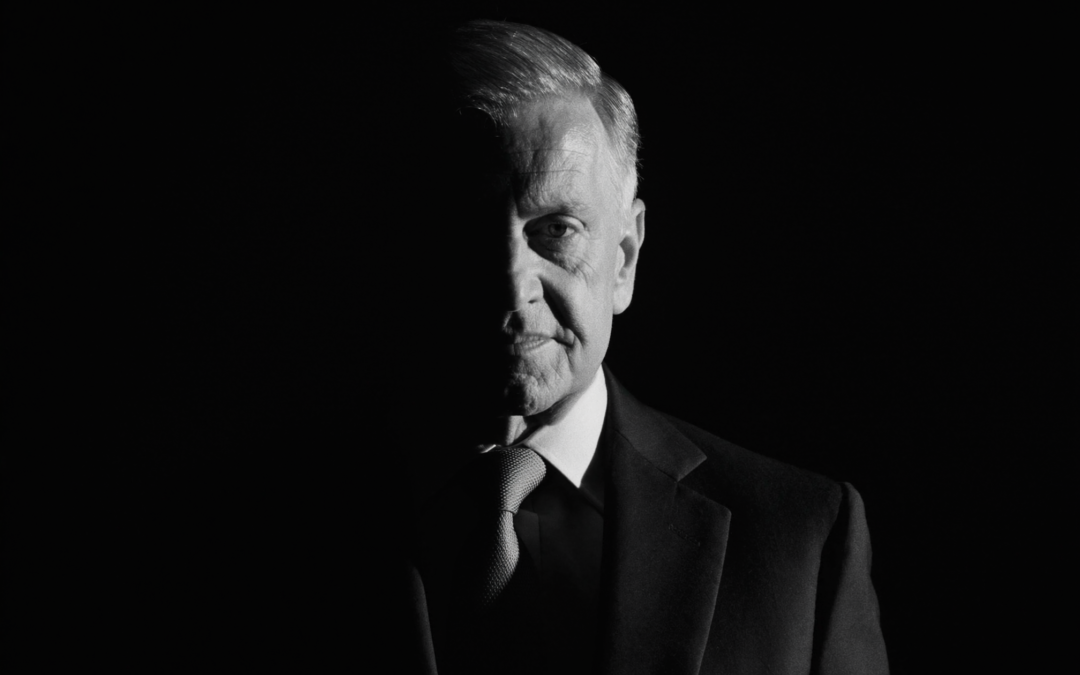
Every leader has a dark twin. You can’t see it, but everyone around you can feel it. It is what Carl Jung called the shadow: the sum of all the impulses, fears, and desires we reject in ourselves. Aggression, envy, insecurity, lust, greed — but also tenderness, grief, longing. We bury these qualities because they don’t fit the image we want to project. The psyche, however, never deletes; it only stores. Whatever you refuse to own, you will eventually act out, usually in the most destructive moments.
This twin is not assembled in the boardroom. It is built early, in the same place your leadership style is built — an echo of your attachment history. The boy who learned that anger costs love becomes the CEO who cannot confront. The girl who learned that need is weakness becomes the chair who calls her exhaustion “drive.”
And here is the paradox the corner office adds: power magnifies the shadow. The more control you gain over others, the less control you tend to have over your own inner distortions — unless you learn to confront them. I have watched gentle men become tyrants when promoted, and kind women become merciless when cornered. Power exposes what was always there; it doesn’t create it. As Jung wrote, “The brighter the light, the darker the shadow.”
In my work with C-suite leaders, the shadow usually enters the room first, disguised as stress, burnout, or conflict. It speaks in complaints: “They’re lazy.” “They’re incompetent.” “They’re disloyal.” Turn the mirror, and the pattern reverses.
Projection: The Shadow’s Favorite Trick
The shadow has one preferred move, and it runs the same way in every executive committee I have ever sat in: what we reject internally, we recreate externally.
Take Tilda, a global retail executive whose case I describe at length in Let’s Talk Leadership. Brilliant, visionary, utterly exhausted. Her complaint was that her team lacked accountability. “They always make excuses. They don’t take ownership.” When I asked about her own boundaries, she admitted she often redid their work late at night rather than confront anyone directly. “It’s just faster if I do it myself.” The more she overfunctioned, the more her team underfunctioned. Her resentment was the shadow of her own avoidance. She wasn’t angry at their excuses. She was angry at her own inability to say no.
This is why the first phase of my executive coaching process is measurement, not advice. When fifteen to twenty-five stakeholders describe the same leader, the recurring irritation is rarely random. The colleague who infuriates you most is holding a mirror to your disowned traits. Until you integrate them, you will keep meeting them in different disguises — in every new hire, every new board, every new company. The psyche is always striving for wholeness, and projection is its way of forcing you to look.
Executive Coaching
The flaw you keep meeting in others may be living in you.
I work with executives whose patterns have outlived three reorganizations and two coaches. We don’t manage the pattern. We find its owner.
Explore Executive CoachingThe Most Dangerous Shadow of All: Moral Superiority
If the shadow has a deadliest form for leaders, it is not greed and it is not rage. It is moral superiority. The belief that “I’m the good one” blinds you to the harm you cause. History is full of ethical leaders who justified cruelty in the name of virtue. In organizations it shows up as righteousness: the CEO who fires hundreds “for the greater good,” the HR leader who bullies in the name of inclusion, the visionary founder who manipulates in the name of intent.
One of my clients, a start-up founder, embodied this perfectly. The media adored him for his mission-driven culture and his public commitment to mental health. Inside the company he was emotionally volatile and tyrannical. “I’m hard on them because I care,” he told me. “I’m teaching resilience.” In truth, he was projecting his own fragility. The shadow had dressed itself in compassion. Only when he recognized that his care was control in disguise did anything begin to shift.
Notice what makes this shadow so dangerous: it is structurally invisible to its owner. The greedy leader at least knows what he wants. The morally superior leader has fused his self-image with virtue itself, so every act of harm arrives pre-justified. It is the respectable cousin of the defenses I describe in my work on narcissistic leadership — grandiosity not about talent, but about goodness. And because rigid self-images grow the largest shadows, the heroic leader falls hardest: he rises through discipline and crashes through disowned humanity. The collapse of idols is never about a single scandal; it is years of unintegrated shadow erupting into daylight.
“If you don’t face your shadow, your shadow will lead your company.”
From Psyche to Org Chart
Leadership is, above all else, a relationship with reality — and reality never visits a leader directly. It arrives through reflection: through people, events, and emotions. The moment you take on authority, the world begins to reflect you back in amplified form. Your slightest doubt becomes hesitation in your team. Your unspoken frustration becomes fear in your managers. Every distortion within you becomes organizational architecture.
This is not a metaphor; it is systems theory in action. The CEO who complains his team is indecisive turns out to avoid firm decisions for fear of conflict. The director who laments her division’s lack of creativity criticizes every idea that deviates from her plan. Organizational culture is the sum of a leader’s repeated emotional states: an anxious culture has fearful leaders, a passive-aggressive culture conflict-avoidant ones. Walk past the value statements and watch the reception desk; that is the real mirror.
Here is the cruelty of altitude: the higher you rise, the less accurate your mirrors become. Power distorts reflection. People begin to tell you what you want to hear, not what you need to hear. They mirror your authority, not your authenticity — not out of malice, but survival. Left uncorrected, this hardens into the reality distortion field I have written about before, where the leader’s narrative quietly replaces the facts. The shadow thrives in that distortion. Unfaced, it will choose your hires (people who compensate for your flaws), dictate your culture (rules that mirror your insecurities), and shape your legacy (stories that excuse your contradictions). This is why I wrote The Chamber of Reflections — because at a certain altitude, an honest mirror has to be deliberately constructed. It no longer occurs in the wild.
Why Ordinary Feedback Never Reaches the Shadow
Most executives believe their 360 reports already cover this terrain. They don’t. Conventional feedback is, in the end, someone else’s projection of your past — and it lands on exactly the defenses that built the shadow. The ego files it, rationalizes it, or outsources it to circumstances. The mirror stays dirty.
What reaches the shadow is not more opinion but structures of truth. In my own practice with executive teams I implement what I call reverse evaluation. Once a quarter, every team member provides their leader with anonymous feedforward — input that focuses not on past mistakes but on improving the outcome of future projects. Then comes the part that matters: the leader must publicly summarize it and respond in front of the group. It is uncomfortable, and that is the point. The leader learns to metabolize truth without defense; the team learns that honesty is safe. It keeps the mirror clean.
Around that ritual sit two further structures. The first is witnesses: two or three people explicitly licensed to name the pattern in real time — “you’re doing the Tilda thing again” — before it costs anyone a quarter. The second is the wide-angle mirror of stakeholder-centered coaching, where the people around a leader, not the leader’s self-report, define what is actually happening. Beneath all of it, three disciplines keep any mirror usable: truth, humility, and humor. Truth means inviting honest feedforward even when it stings. Humility means accepting that your perception is always partial. Humor means staying human enough to laugh at your own distortions — leaders who can laugh at themselves keep the mirror clean. But hear the warning: awareness without action is vanity. The mirror is meant to clarify movement, not replace it.
Integration, Not Exorcism
Here is where most leaders go wrong: they treat the shadow as something to fix. It isn’t. It is something to understand. Every dark impulse carries energy. Anger isn’t wrong; it’s distorted agency. Envy isn’t sin; it’s unacknowledged desire. Arrogance isn’t evil; it’s unintegrated confidence. I once asked a senior executive who struggled with jealousy what that jealousy wanted for him. After a long silence: “It wants me to admit I’m ambitious.” Years of performing humility had curdled into bitterness. When he finally claimed his ambition as legitimate, the jealousy dissolved — not exorcised, integrated.
Integration does not mean acting out every impulse. It means bringing awareness to the energy underneath it, so that what once acted through you unconsciously can now be channeled by choice. That demands radical honesty: admitting that you enjoy power, that you crave recognition, that you sometimes manipulate outcomes. Most leaders secretly believe they must be good to be worthy of respect. But people don’t trust you because you’re perfect; they trust you because you’re real — which is the entire argument of authentic leadership, properly understood.
This work is not done alone, and it is not done with a cheerleader. It requires what I call critical friendship: love and confrontation in the same room — someone who will tell you the truth even when it hurts, because leadership without accountability is just ego management. Whether that belongs in your life is a question worth asking honestly; I keep a plain answer to who this work is for, and it is not everyone.
So here is the invitation Jung left us, and the one I repeat at my kitchen table in Drachten: stop trying to be good. Be whole instead. Own your contradictions, name your fears, claim your desires. Let your shadow sit at the table — it behaves far better there than locked in the basement.
Wholeness is not therapy-speak. It is a leadership asset with observable returns: the quiet authority of leaders who no longer need to perform virtue. People feel it before they can name it — “there’s something grounded about her,” “he feels safe to be around.” What they are sensing is integrity. Not perfection. Integration. As Jung put it, “One does not become enlightened by imagining figures of light, but by making the darkness conscious.” And as Joseph Campbell promised: in the cave you fear to enter lies the treasure you seek. Your shadow is not a flaw to eliminate. It is a frontier — the last territory you govern that you have never visited. Go meet the part of you that has been leading all along.
Related Reading
Narcissistic Leadership: The Engine Nobody Wants to Name
The Reality Distortion Field: When the Leader’s Story Replaces the Facts
Attachment Theory and Leadership: The Echo That Runs the Room
From the Book
The shadow, the mirror, and the full architecture of power are explored in Let’s Talk Leadership — endorsed by Marshall Goldsmith.
Discover the BookReady to meet the part of you that leads without permission?
Critical friendship — the balance between love and confrontation. The first conversation happens at my home in Drachten.
Book a confidential call Is This For Me?